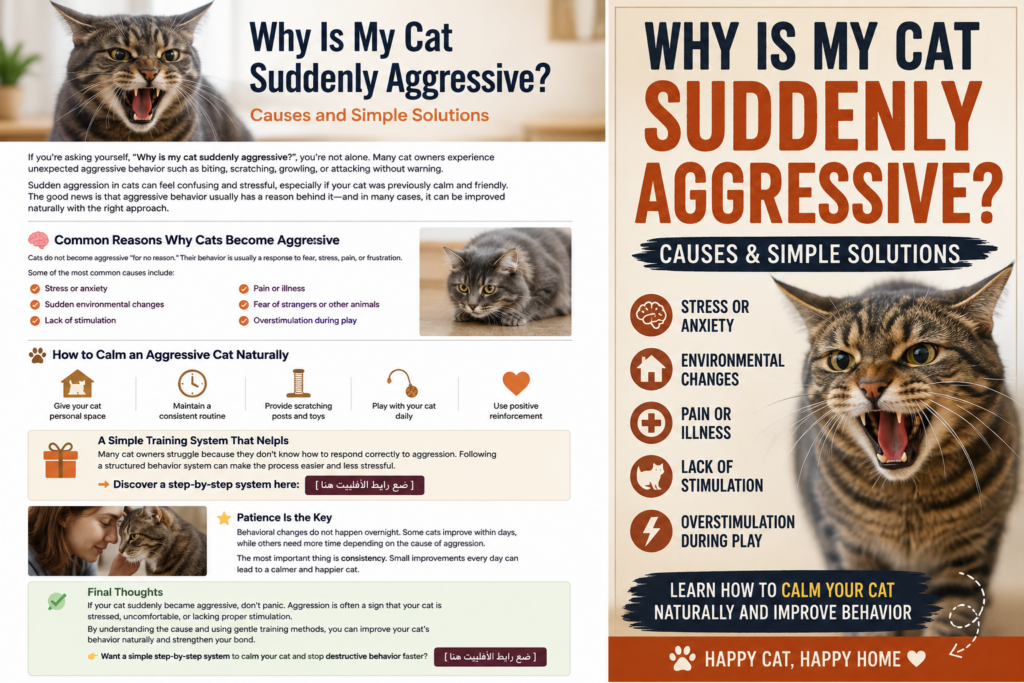
Why Is My Cat Suddenly Aggressive? Causes and Simple Solutions
If you’re asking yourself, “Why is my cat suddenly aggressive?”, you’re not alone. Many cat owners experience unexpected aggressive behavior such as biting, scratching, growling, or attacking without warning.
Sudden aggression in cats can feel confusing and stressful, especially if your cat was previously calm and friendly. The good news is that aggressive behavior usually has a reason behind it—and in many cases, it can be improved naturally with the right approach.
 Common Reasons Why Cats Become Aggressive
Cats do not become aggressive “for no reason.” Their behavior is usually a response to fear, stress, pain, or frustration.
Some of the most common causes include:
- Stress or anxiety
- Sudden environmental changes
- Lack of stimulation
- Pain or illness
- Fear of strangers or other animals
- Overstimulation during play
Understanding the root cause is the first step toward solving the problem.
 Stress and Anxiety in Cats
Cats are highly sensitive animals. Small changes in their environment can trigger stress and aggressive behavior.
Examples include:
- Moving to a new home
- Loud noises
- New pets
- Changes in routine
A stressed cat may:
- Hide more often
- Growl or hiss
- Attack unexpectedly
Creating a calm and predictable environment can help reduce anxiety significantly.
 Pain Can Cause Aggression
Sometimes aggression is linked to physical discomfort. A cat in pain may become defensive when touched or approached.
Common medical causes include:
- Injuries
- Dental pain
- Arthritis
- Illness or infections
If the aggression appears suddenly and intensely, a veterinary checkup is always recommended.
 Lack of Play and Mental Stimulation
Indoor cats especially need daily activity. Without enough stimulation, cats may develop frustration and destructive behavior.
Try:
- Interactive toys
- Daily play sessions
- Climbing areas
- Puzzle feeders
Even 15 minutes of active play each day can improve your cat’s mood and behavior.
 Avoid Punishment
Punishing an aggressive cat usually makes the situation worse. Shouting or physical punishment increases fear and damages trust.
Instead:
- Stay calm
- Redirect the behavior
- Reward positive actions
Cats respond much better to patience and consistency.
 A Simple Training System That Helps (Affiliate Link Placement)
Many cat owners struggle because they don’t know how to respond correctly to aggression. Following a structured behavior system can make the process easier and less stressful.
A step-by-step approach can help you understand your cat’s triggers and encourage calmer behavior naturally.
 How to Calm an Aggressive Cat Naturally
Here are simple ways to reduce aggression:
- Give your cat personal space
- Avoid overstimulation
- Maintain a consistent routine
- Provide scratching posts and toys
- Use positive reinforcement
Over time, your cat will feel safer and more relaxed.
 Patience Is the Key
Behavioral changes do not happen overnight. Some cats improve within days, while others need more time depending on the cause of aggression.
The most important thing is consistency.
Small improvements every day can lead to a calmer and happier cat.
 Final Thoughts
If your cat suddenly became aggressive, don’t panic. Aggression is often a sign that your cat is stressed, uncomfortable, or lacking proper stimulation.
By understanding the cause and using gentle training methods, you can improve your cat’s behavior naturally and strengthen your bond.
 Want a simple step-by-step system to calm your cat and stop destructive behavior faster?